This story includes descriptions of brutal violence.
The US Department of Homeland Security has moved to end Temporary Protected Status for Burmese refugees. The department claims it’s safe for them to return to the country also known as Myanmar.
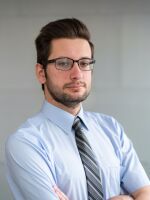
Western Michigan University student Shofi Alom disagrees. Alom is Rohingya. They're an ethnic minority in Burma who have long faced oppression from the authoritarian state.
Alom said at age 11, the government conscripted him for forced labor. But that was not the worst thing he faced.
Shofi Alom: “They started killing bunch of people and then people our people protested and then they started like increasing the violence was increasing from there on.”
The year was 2012. Alom said the government was participating in mass killings, carried out by groups of nationalists and Burmese authorities.
According to the US Holocaust Memorial Museum, two mass killings took place in 2012, and over 100,000 mostly Rohingya survivors were put into internment camps.
Alom: “They usually don't kill you by alone. They usually kill you in front of your family members. They either slaughter you with the machete. Usually they don't shoot you. It's rare because you're going to die instantly. They want you to suffer before you die.
Alom: "So, they will just throw you in a fire in front of your family. Like, there was many events raping women in front of their household members, husbands, daughters, and brothers or throwing the babies in the fire. That was in my village too, in other village. It's very hard to talk about, but that's another reason is like, I don't want to be thrown in a fire or be killed in front my family members.”

The United States declared that later mass killings, carried out by the Burmese military against the Rohingya between 2016 and 2017, amounted to genocide. In remarks at the Holocaust Memorial Museum in Washington, D.C. in March 2022, then-Secretary of State Antony J. Blinken said that more 9,000 Rohingya were killed in Burma in 2017.
Michael Symonds: “It seems like leaving was the only option at that point.”
Alom: “Yes, I mean I was going to either, there was a very high chance — I was going to either die there or going fleeing the country, there's also at least 50% chance that I was going to die. But I knew that if I don't die, I might have a brighter future.”
Alom said that a few years later, in 2015, his family was able to meet with human traffickers who said they would take him to Malaysia. Alom, now age 13, was crammed into the bottom of a fishing boat with over two hundred other refugees. He said he couldn’t lie down. He had to sit and hold his knees.
Alom: “So, the food they give us just tiny bit rice twice a day very little and just twice a day little bit water. I will say about four ounces of water a day.”
Symonds: “Just enough.”
Alom: “Just enough to survive.”
Symonds: “Was there any point that they weren't giving you water or they ran out?”
Alom: “At some point there was a problem with the boat and they were just giving us once a day, the water. And some of us start reaching the water from the ocean and drinking it.”
This made Alom sick, and he said he began to believe he would never make it to Malaysia.
After 11 days, the traffickers announced the Malaysian border was too restricted, and they would have to land in Thailand.
Alom: “They took us middle of the jungle and that's where we stayed. I stayed for six days until we all ran out of the food and human traffic cannot lead us. At that moment they say, 'you guys can go wherever you want.'”

So there Alom was, free, but alone.
Alom: “That's where I ate leaves— for six days journey in the jungle. That's where I ate leaves, trees just to survive and slept on the dirt, wherever I can. And of course, now, one thing that I was very glad being in the jungle was I was able to drink water from the river.”
Alom eventually made it to a farm, where a worker called the police. Alom was arrested. He went to a police station lock-up, then jail, and eventually an orphanage.
Alom: “All of this time I was just crying, every single day and all the time and I didn't speak English or Thai or any other languages except the language that I know called Rohingya. And then after 20 days, I said I want to be with other people, some other Rohingya people that I was with. Especially, there was some other people from my village because they put me alone and I don't know what they're going to do. I was scared. I was scared being alone. And then they took me to detention center. Where they held the adult people.”
Symonds: “How were you able to apply to go to the US or somehow convince the government to let you go?”
Alom: “After I went to detention center where I met the UN representatives multiple times, they asked me if I want to go to any European or come to the US or Canada, they ask me. My first impression was no. Either release me here, either take me to Malaysia or take me back to Burma. I want to be with my family and die together.”

After over a year in the detention center, Alom agreed to be taken to the US, despite what he was hearing from other refugees.
Alom: “Initially, I also didn't sign up. It was because there was rumors that if I come to the US — you know, I was a kid. So, I believe every pretty much everything what people said. So, they said, like, they want your organs and they want to do this and they're going to force you to have tattoos and all kind of stuff. Anything that you can think about to make people feel disgusted or scared of.”
Symonds: “What convinced you to look beyond what was being told to you?”
Alom: “I was being in a detention center for like already four or five months. I've seen all crazy stuff. People are fighting, hitting each other, even there was time they hit me. Of course, I was beaten in the boat, when I was in the jungle also by human traffickers. But also, in a detention center people were hitting me. I was the smallest. They were hitting me. It was terrible conditions. I was locked up behind the cells. I just said, you know, I don't care whatever they do. I just need to get out from this.”
The United Nations sent Alom to Grand Rapids in 2016. He lived with foster families, learning English and catching up in school. He finished high school in 2022. And he’s set to graduate from WMU next year. He recently received a $5,000 scholarship created by WMU President Russ Kavalhuna and the WMU chapter of the American Association of University Professors.
Alom: “I’m happy. I’m glad. But I never imagined even just going to college or able to go to school. But going to now graduating with electrical engineering degree, it's going to be an example for other people that if I can do it, anyone else can do it too.”
A federal judge in Illinois has postponed the end of Temporary Protected Status for Burmese refugees. DHS appealed this decision in February.
Alom’s a US citizen now, but he said for Burmese with TPS, it’s absolutely not safe to go back.
Alom: “Whether you're Rohingya or other ethnic groups, it is not safe at all. Even just recently, even my relatives who just fled the country to neighboring country. Even my parents, they recent, about a year ago, they fled to Bangladesh. I have other family members, they are prepared to flee the country when they can. It is not safe. It's rather the situation getting worse day by day.”
Michael Symonds reports for WMUK through the Report for America national service program.